What Is a MRF? How TDS Sorts Single-Stream Recycling
When you place an empty plastic bottle, cardboard box or aluminum can in your recycling cart, you may not think much about what happens after it leaves your curb. But recycling doesn’t end when the cart is emptied. Those materials begin a journey through a Materials Recovery Facility, commonly known as a MRF.
A MRF is a specialized facility where recyclable materials are sorted, processed and prepared for their next use. At Texas Disposal Systems (TDS), the MRF plays an important role in recovering recyclable materials collected from the communities we serve.
What Does MRF Stand For?
MRF stands for Materials Recovery Facility. It is a facility designed to receive and sort recyclable materials so they can be separated by material type and prepared for processing and reuse.
TDS operates a 160,000-plus-square-foot MRF in Creedmoor, Texas, capable of processing approximately 40–45 tons of material per hour. The facility combines mechanical equipment, optical sorting technology and manual sorting to separate recyclable materials efficiently.
Materials processed at the MRF include:
- Cardboard
- Paper
- Plastic
- Aluminum
What Is Single-Stream Recycling?
Single-stream recycling allows residents to place accepted recyclable materials together in one recycling cart instead of separating them by material type. After collection, the mixed materials are transported to the MRF, where specialized equipment and employees sort them into separate material streams.
This approach makes recycling more convenient for households and businesses while allowing the facility to handle the sorting during processing.
From the Recycling Cart to the MRF
What happens after your recycling is collected? The process involves several steps.
- Collection: Recyclable materials from homes, businesses, schools and other collection programs are gathered in a single recycling stream.
- Delivery: The mixed materials are transported to TDS’ MRF in Creedmoor and introduced into the processing system.
- Sorting: Conveyors move materials through a series of mechanical and optical sorting systems. Optical sorters use sensors to identify certain materials based on their characteristics, helping separate items such as different types of plastics from the mixed stream. Employees also help sort materials and maintain the flow of recyclable items through the facility.
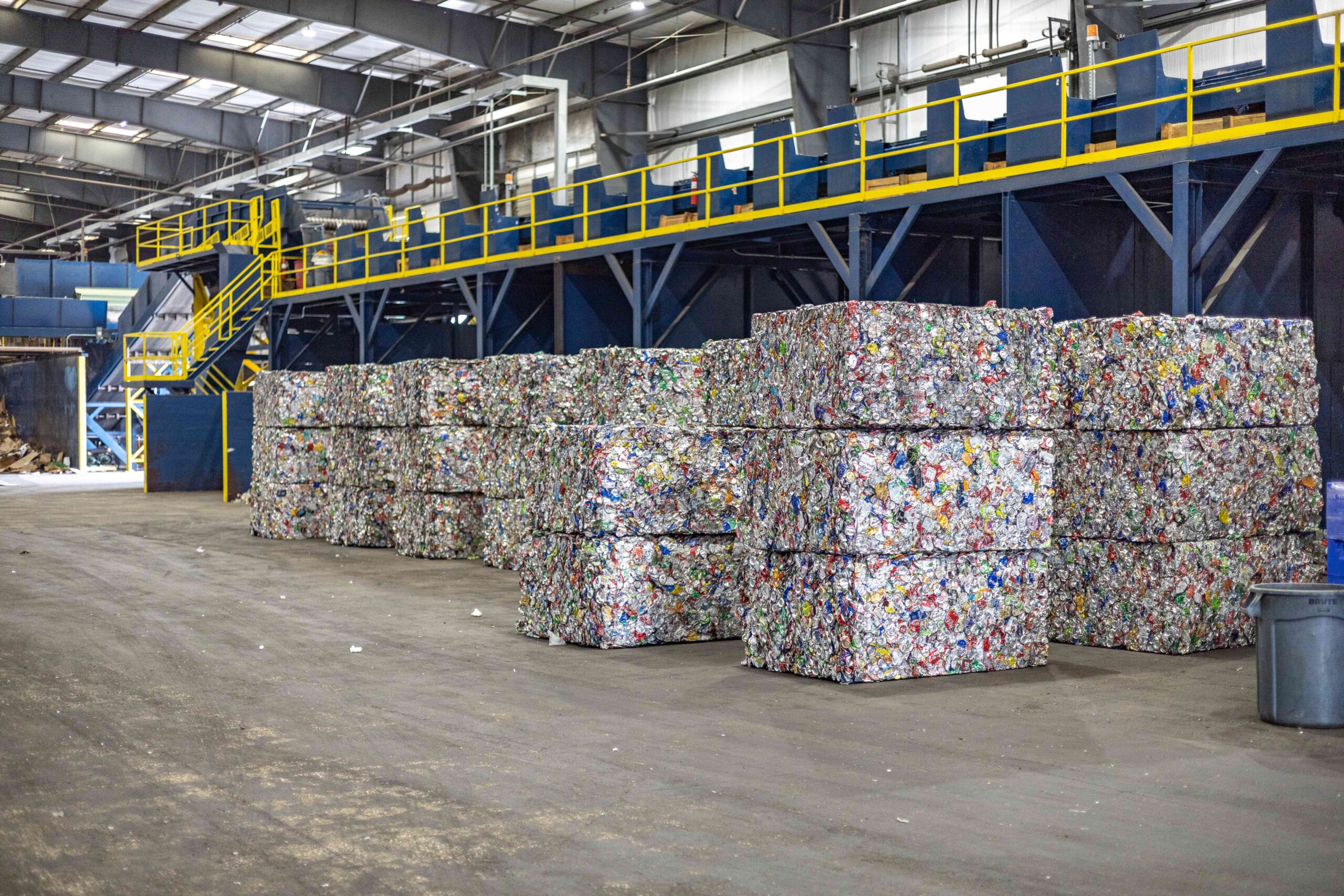
- Processing and baling: Once separated, recyclable materials are compressed into bales for efficient transportation. These bales are then sent to market for use in manufacturing and other second-life applications.
Baling allows large quantities of material to be transported more efficiently. For example, a cardboard bale weighs approximately 1,700 pounds, while an aluminum bale weighs approximately 1,000 pounds and contains about 33,000 individual aluminum cans.
How Does a MRF Sort Recycling?
Processing tens of tons of mixed materials each hour requires specialized equipment. At TDS, mechanical systems, optical sorters and manual sorting work together to separate recyclable materials.
Optical sorters are an important part of the process. As materials move along conveyors, sensors scan items and help identify specific material types. The system then uses targeted air jets to direct identified items away from the main stream and into the appropriate sorting area. This technology helps separate materials that may look similar but have different compositions, supporting the recovery of individual material types.
“Optical sorters let us identify materials the way a scanner reads a barcode, by light, and separate them in a fraction of a second using pressurized air,” said Director of Recycling and Organics at Texas Disposal Systems Ryan Driskell. “This helps us optimize our sorting of single stream recycling. We sort it so every bale we ship is ready to be made into something new.”
Mechanical equipment moves materials through the facility and helps separate them by size and other physical characteristics. Employees also play an important role in sorting and monitoring materials throughout the process.
Together, these systems allow the TDS MRF to process approximately 40–45 tons of material per hour.
Why Is Single-Stream Recycling Important?
One of the biggest advantages of single-stream recycling is convenience. Residents don’t have to separate their recyclable materials before placing them in the recycling cart.
That convenience can make it easier for households to participate in recycling regularly. Instead of having separate containers for cardboard, plastic, and aluminum, these materials can be placed together and sorted later at the MRF.
The MRF then provides the infrastructure needed to take that mixed collection and turn it into organized material streams that can be processed and sent to market.
What Should Go in the Recycling Cart?
Although single-stream recycling allows accepted materials to be placed together, not everything belongs in the recycling cart.
Common materials accepted through TDS recycling programs include cardboard, paper, plastic, aluminum and glass. However, accepted items can vary by service area, so it’s important to check local guidelines.
Plastic bags can become tangled in sorting equipment, while food waste and residue can contaminate recyclable materials. Keeping these items out of the recycling cart helps support the sorting process.
When you’re unsure whether an item belongs in the recycling cart, the TDS Waste Wizard can help answer the question: What goes where?
Giving Recyclable Materials Another Path
Recycling takes more than a collection cart. It involves people, specialized equipment and processing facilities that work together to recover materials and prepare them for their next use.
The next time you place a cardboard box, plastic container or aluminum can in your recycling cart, remember the work that happens behind the scenes. From collection and sorting to baling and transportation, each step helps move recyclable materials toward their next destination.
Learn more about the MRF and the recycling process at TDS here.