Exotic Game Ranch & Pavilion
 

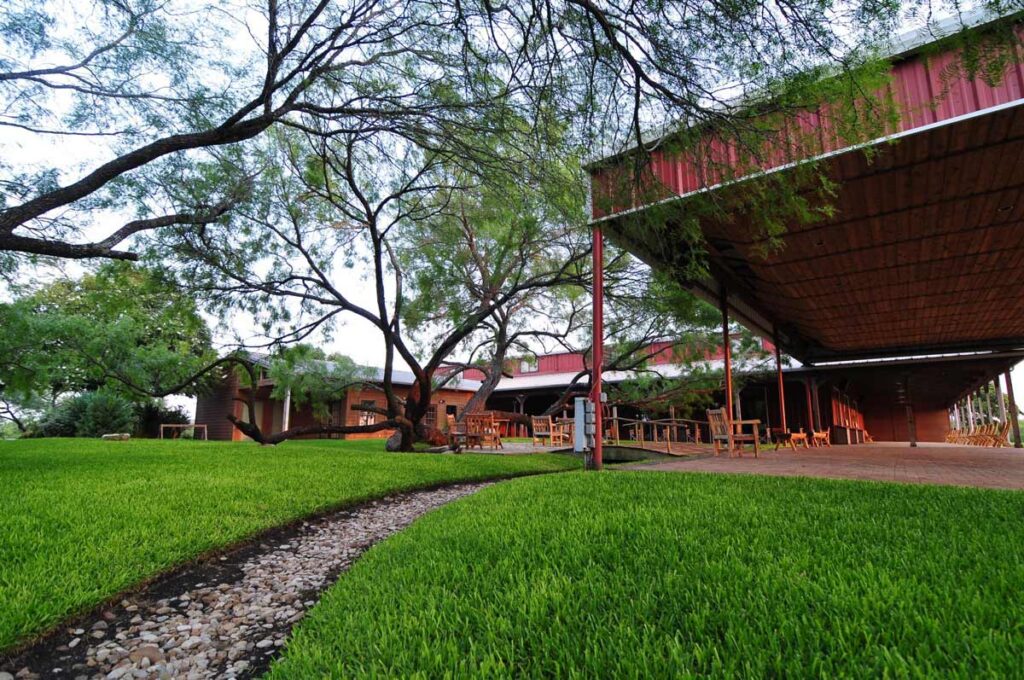
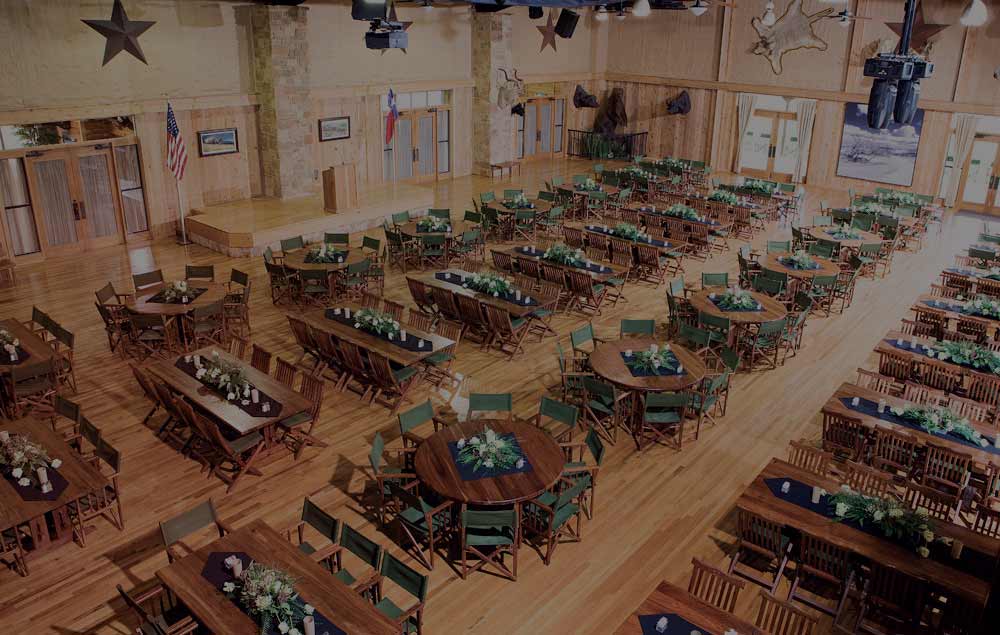
The Texas Disposal Systems Exotic Game Ranch and Pavilion is used as a working ranch and invited guest entertainment facility operation.  The ranch land is comprised of land that is under permit for future landfill expansion and a portion of the buffer zone next to the landfill and compost operations.  Cattle and horses are raised and sold.  The wildlife reserve is used primarily for animal production and sale to other ranches as well as endangered species conservation.   Neighbors and visitors enjoy seeing the animals throughout the year. 

Inside the TDS facility, visitors can tour the exotic game ranch complete with approximately 800 acres that is home to more than 1,600 animals from 30 different species.  Most of these animals are not indigenous to Texas or even North America.  Our wildlife ranch consists of many foreign inhabitants from Africa, Asia Minor, Australia, England, Israel, India, Middle East, New Zealand, and Pakistan.

Below is a list of animals currently flourishing at the facility.  Scroll down the list to take a walk on the wild side!

 Click on the animal image to view larger pictures.


Native Land: Africa
Weight: 200 to 275 pounds
Gestation Period: 8 ½ months
Number of Young: One
Maximum Age: 20-25 years
Horns: Both male and female (Average 28 ½”; Longest 38”)

Addax

The Addax possesses broad, flat hooves with flat soles that help prevent them from sinking into the desert sand.  In the winter their coat is dark grayish-brown and in the summer their coat becomes white.  They dig deep depressions in the sand where they rest.  They prefer to rest underneath boulders that give shade and protection from the hot desert sun and wind.  The Addax is a highly endangered species. 


Native Land: Africa
Weight: 150-300 pounds
Gestation Period: 5
½ -6 months
Nu
mber of Young: One to two
Maximum Age: 10 - 15 years
Horns: Both sexes- average 23”, longest 35”

Aoudad

A wild sheep of northern Africa with long, curved horns and a beard-like growth of hair on the neck and chest. They are also called Barbary sheep but are closer related to a goat. The babies are called kids and males have a strong scent, make grunting sounds and have an outstanding climbing ability. 


Native Land: India
Weight: 150 to 200 pounds
Gestation Period: 7 ½ months
Nu
mber of Young: One (twins are rare)
Maximum Age: 9 to 13 years
Antlers: Males only

Axis Deer

The Axis Deer is native to the Indian subcontinent.  It is considered to be the most beautiful of deer, with a bright reddish coat marked with rows of white spots that persist throughout life.  The antlers are not dropped in any specific season.  They breed well in captivity and possess a cautious nature. 


Native Land: India
Weight: 370 to 400 pounds
Gestation Period: 8 months
Number
of Young: One
Maximum Age: 20 years
Antlers: Males only

Barasingha

They shed their antlers in January-February and have a very heavy winter coat.  They have a docile nature and are not very social.  The Barasingha can be found in a wide range of habitats, especially preferring marshes, where it can be highly aquatic, and grassy areas close to the water. 


Native Land: India and Pakistan
Weight: 50-100 pounds
Gestation Period: 5-6 months
Number of Young: One
Maxim
um age: 10 years
Horns: Males only (spiral shaped) up to 30-32"

Blackbuck Antelope

Antelope of India that inhabits open grasslands. They have a black coat with white under parts- the dominant male is usually the darkest. The females and young males are yellowish-brown. During mating season the males will strut with a comical mincing gait with their heads tossed upward and their horns flattened along their backs. Currently, there is more blackbuck in Texas than in their native homeland. They breed exceptionally well in captivity.  


Native Land: South Africa
Weight: 120 to 180 pounds
Gestation Period: 8 months
Number of Yo
ung: One
Maximum age: 13 years
Horns: Both sexes- longest 20"

Blesbok

These antelope are dark brown with clearly contrasting white under parts and white-masked face divided by a brown line above the eyes at the forehead. Many consider them the fastest of the South African antelope. When alarmed they stand in a curiously stiff and constrained attitude with the head held high, the neck erect and the forelegs and hind legs spread wide apart. 


Native Land: North America
Weight: Up to 2,500 pounds
Gestation Period: 8 months
Number of
Young: One
Maximum age: 13 years
Horns: Both sexes-longest 20"

Buffalo/Bison

The buffalo are the largest mammal on the North American continent. The bulls utter a rumbling roar during mating season (May-September) and possess an unpredictable nature. They love to be fed but have strong breath. They have amazing mobility, speed and agility and are able to sprint at speeds of 30 mph. 


Native Land: Southern Africa
Weight: 75 to 165 pounds
Gestation Pe
riod: 6 ½ to 7 months
Number of Young: One
Maximum Age: 12 to 15 years
Horns: Both sexes

Dama Gazelle

These small antelope range from rich brown to gray to white in color, with a streak of white or red on the face.  The horns are oval to round with 18-23 rings and curved at the tips.  These animals have great sight, hearing and scent and can survive without water for long periods. 


Native Land: Africa
Weight: 1,000 to 1,600 pounds
Gestation Period: 9 months
Number of Young: One
Maximum A
ge: 25 years
Horns: Both sexes-longest 44” to 56” in different sub-species

Eland

These large and muscular African antelope produce excellent milk, adapt and mate well in captivity. In the former Soviet Union, they are raised like cattle. Largest of the antelope family.


Native Land: Australia
Weight: 120 pounds
Incubation Period:  52 days
Number of Young: 9-12 eggs
Maximum Age: 5-10 years
 

Emu

Emu is the common name for members of a genus of large, flightless birds, of which only one species survives.  Next to ostriches, emus are the largest of birds.  Their hair-like body feathers are dull brown and the naked parts of the head and neck are grayish-blue.  The eggs are incubated entirely by the male, which also cares for the chicks. 


Native Land: England and Asia Minor
Weight: 130-220 pounds
Gestation Period 7 ½ months
Number of Young: One
Max
imum Age: 11-15 years
Antlers: Males only- average 20”; longest 30”

Fallow Deer

These deer have flattened palmate antlers with many points.  Their coats are three colors (white, chocolate and/or spotted).  The bucks become quite tame and social. 


Native Land: Africa
Weight:  600 pounds
Gestation
Period: 12 months
Number of Young: One
Maximum Age: 22 to 25 years

Grant's Zebra

No two zebras have the same stripe pattern. Their prints are even different on opposite sides of the body. The males are called stallions and females mares and babies colts. They call to each other using barking sounds. They are very aggressive and have a mean bite like their cousin the horse.


Native Land: Africa
Weight: 385 to 600 pounds
Gestation Period 7 to 9 months
Number of
Young: One
Maximum Age: 20 years (10 to 15 in the wild)
Horns: Males only- average 48”; longest 67”

Greater Kudu

The Greater Kudu is a member of the antelope family.  This graceful animal can leap great heights.  The males' horns begin formation of their first spiral at 2 years.  The full development of horns, 2 ½ spirals, will occur at 6 years of age.  The animal is very friendly and quite social.


Native Land: Africa
Weight: 100 to 145 pounds
Gestation Period: 6 to 7 months
Number of Young: One
Maximum
Age: 12 years
Horns: Males only- average 20”; longest 32”

Impala

These antelope are very graceful.  They can jump as high as 10 feet and as far as 30 feet in a single bound.  Females leave the herd to give birth.  From the side, its tawny appearance hides its outline from predators.  Its rear is marked with a black and white "flag" (which after giving a warning snort, they bound off flashing their hind quarters indicating the direction of escape to the others behind) to keep the herd together. 


Native Land:  North America
Weight: 800-2,000 pounds.
Gestation Period: 11 months
Number of Young: One (twins are rare)
Maximum Age: 20-30 years
Horns:  Male and Female

Longhorn Steer

Small, slim cattle.  Each of the cattle will vary in their coloring and markings.  An individual animal may have areas of black, gray, brown and white.  There are examples, which are mono-colored, or have patches, spots or brindling.  They are long legged, slim and lightly muscled.  They have an easy time calving.  Their horns are impressively long and spreading.


Native Land: Northern Africa and Israel
Weight: 100 to 160 pounds
Gestation Period: 5 months
Number of Young: One or two
Maximu
m Age: 15-20 years
Horns: Both sexes- average 15”; longest 46” to 56”

Nubian Ibex

These are wild goats of the Israeli countryside. They are nimble footed, tan-colored with dots, which helps them blend well with the rugged limestone hills of the Negev and Judean wilderness. The older males have large scimitar-shaped horns, which make a magnificent silhouette.


Native Land: Southeastern Africa
Weight: 120 to 275 pounds
Gestation Period:  7 months
Number of Young: One
Maximum Age: 16 years
Horns: Males only (Average 24”; Longest 34”)

Nyala

This slender antelope is found in southeastern Africa and is distinguished by vertical white stripes on the side of the body.  The female has a reddish-brown coat, while the mature male's coat is charcoal-gray.  The male has loosely spiraled horns.  When the Nyala becomes alarmed, it makes a dog-like bark to warn others nearby.


Native Land: Africa
Weight: 200 to 300 pounds
Height: 6 to
8 feet
Incubation Period: 40 to 42 days

Ostrich

The ostrich, the only bird in the world with two toes, is a member of the Ratite family. The males are black with white wing tips and tail plumes. The females and young birds are a brownish-gray color. The hens have a common nest - the males sit on the nest at night and the females during the day. They can run at speeds up to 45 mph and can be very aggressive. 


Native Land:  England
Weight: 400 to 600 pounds
Gestation Period: 7 ½  to 8 months
Number
of Young: One
Maximum Age: 12 years
Antlers: Males only

Red Deer

Red deer are strong swimmers. Their antlers generally have 10 or more tines.  During the rut, the male develops a lion-like roar with which he greets his challenger.


Native Land: Africa
Weight: 140 to 270 pounds
Gestation Period: 7 to 8 months
Number of Young: One
Maximu
m Age: 14 years
Horns: Males only- average 26”; longest 31”

Red Lechwe

Red Lechwe are strong swimmers. The number of these animals has been greatly reduced; the majority of the surviving animals live in African national parks. They are considered a threatened species. 


Native Land: South America
Weight: 60 – 100 pounds
Incubation period: 40 days
Number of Young: 12 –30 eggs

Rhea

The plumage of the Rhea is a drab gray-brown on both the male and female.  The average Rhea can grow to be 5 feet tall.  The male digs a nest in which the female then lays anywhere between 12 and 30 yellow-cream colored eggs.  The male returns to the nest and incubates the eggs for 6 weeks until they hatch and then proceeds to raise them.


Native Land: Africa
Weight: 450 pounds
Gestation Period: 9 months
Number of Young: One
Maximu
m Age: 18 years
Horns: Both sexes- average 30”, longest 50”

Sable

These animals have acute hearing and a highly developed sense of smell.  The males darken as they mature.  The females and young males are brownish-black in color.  The sable rivals the Greater Kudu as most-handsome antelope, especially the male giant sable.  They have a compact powerful build, thick neck enhanced by upstanding mane, and sturdy legs. 


Native Land: Africa
Weight: 220-400 pounds
Gestation Period: 8 ½  months
Number of Young: One
Maximum Age: 18 years
Horns: Both sexe
s - average 35", longest 50"

Scimitar-Horned Oryx

They use their horns to protect themselves from predators, even spearing them to death. They are endangered species and can be found in private herds in various parts of the world.  Oryxes are light in color with dark patches on the face and legs.  The Scimitar-Horned Oryx has long, back-curved horns; it is nearly white with chestnut markings.


Native Land: Switzerland
Weight: 1200-2800 pounds
Gestation Period: 285 days
Number of Young: One (occasionally twins are born)
Maximum Age: 12 years
Horns: Male and some female

Simmental Cattle

Simmentals are very quiet if handled correctly.  The traditional color is blonde to chestnut brown and even cherry red.  They have white markings on the head and underside of the brisket and their stomachs.  The legs and tail switch are generally white and there may be white patches on other parts of the body.


Native Land: Africa
Weight: 330-500 pounds
Gestation Period: 8 ½ months
Number of Young: One
Maximu
m Age: 18 years
Horns: Males only- average 26”, longest 36”

Waterbuck

Waterbuck have a white ring on their hindquarters, which provides a target for their young to follow in dense vegetation.  They can stay in water for long periods of time.  Their oily coats give off a strong odor.  Waterbuck are docile in nature.


Native Land: North, Central and South America
Weight: 100 to 250 pounds
Gestation Period: 7
½  months
Numbe
r of Young: One or two
Maximum Age: 10-12 years
Antlers: Males only

White-tailed Deer

Texas has the largest population of white-tailed deer in the United States. They have a large white tail that looks like a waving white flag when they become alarmed. The fawns are born in the spring to early summer. These deer have a cautious nature.


Native Land: Northern South Africa to Kenya
Weight: 350-500 pounds
Gestation Period: 8 ½ months
Number of Young: One
Maximum Age: 21 years
Horns: Both sexes

Wildebeest (brindled gnu)

The Wildebeest's general coloration is grayish silver with brownish bands on the neck, shoulders, and forepart of the body and the face, mane, beard, and tail are black.  The Wildebeest feeds on short grass and can be found in woodlands as well as open grasslands (with a nearby source of water).